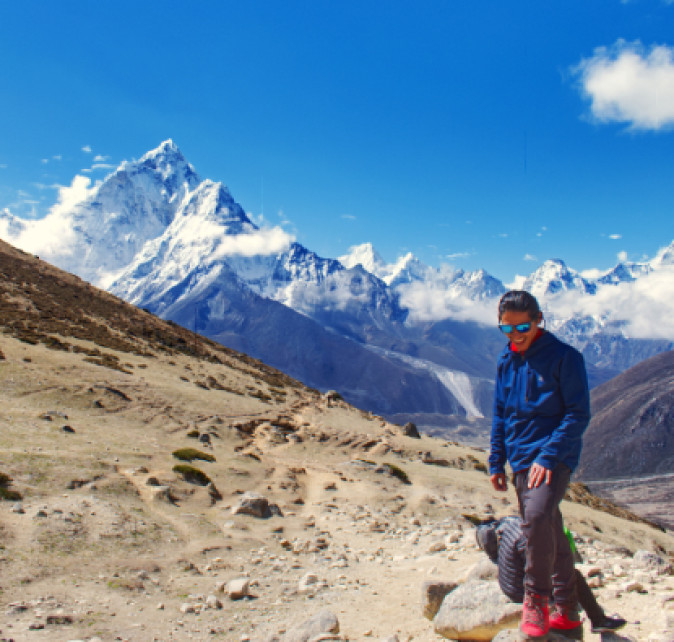
Wondering if you're ready for your first Himalayan trek?
For many people, their first trek in Nepal begins with excitement — and quite a few questions.
Am I fit enough?
What should I pack?
Will I be comfortable at altitude?
What are the mountain lodges really like?
Do I really need to walk for six or seven hours every day?
We hear these questions regularly.
And after years of organizing journeys through Nepal's mountains, we've learned that preparing for a trek isn't about becoming an athlete before you arrive.
It is about choosing the right route, preparing sensibly, understanding the conditions and having the right people around you.
At Himalayan Nature Treks, we don't expect every traveler to arrive with the same fitness, experience or expectations.
Some travelers come to Nepal looking for a challenging high-altitude adventure. Others want magnificent mountain views but prefer shorter walks and comfortable accommodation. Some want to combine trekking with wildlife and culture. Others would rather explore remote landscapes by camping, or use a helicopter to reach places that would otherwise require several days of walking.
There is more than one way to experience Nepal.
So, before you pack your bags, here is what we recommend for your first Himalayan journey.
Can I Trek in Nepal If I've Never Trekked Before?
Yes. You don't need previous Himalayan trekking experience for many routes in Nepal.
The important thing is choosing a trek that matches your fitness, walking experience, available time and the kind of experience you want from your holiday.
A first trek does not have to mean the hardest trek.
For some travelers, the right introduction to Nepal might be a gentle mountain hike with spectacular views. For others, it may be a classic multi-day Himalayan trek.
Our job is to help you understand the difference and choose what feels right for you.
First: Choose the Right Trek for You
The most important part of preparing for a trek happens before you even put on your hiking boots.
Choose a journey that matches you.
Nepal has everything from gentle mountain walks through villages and forests to demanding high-altitude adventures.
When we speak with a traveler, we don't look only at the name of the trek. We consider how you want to spend your time in Nepal.
- How many days you have
- How much you normally walk
- Your previous trekking experience
- Your preferred walking pace
- The altitude you are comfortable with
- The type of accommodation you prefer
- Whether you are traveling with family
- Whether you want a challenging adventure or a more relaxed experience
- Your interest in wildlife, nature and culture
- The time of year you are traveling
A trek that is perfect for an experienced hiker may not be the right choice for someone taking their first Himalayan journey.
And that's completely fine.
Don't choose a trek simply because it is famous. Choose it because it suits the experience you want.
How Fit Do You Need to Be?
You don't need to be a marathon runner to trek in Nepal.
But you should be comfortable walking for several hours, sometimes on uneven ground and with regular uphill and downhill sections.
For most people, the best preparation is surprisingly simple:
Walk.
Start with the amount of walking you can comfortably manage and gradually increase the distance and duration.
If possible, include:
- Hill walking
- Stairs
- Longer weekend walks
- Uneven terrain
- Regular aerobic exercise
- Basic leg and core strength exercises
You don't need to train for speed.
In fact, we encourage our trekkers to forget about speed altogether.
The Himalayas are not a race.
A Simple 8–12 Week Preparation Plan
If you have several weeks before your trek, build your fitness gradually.
| Period | What to Focus On |
|---|---|
| Weeks 1–4 | Regular walking and basic strength |
| Weeks 5–8 | Longer walks and more hills or stairs |
| Weeks 9–12 | Longer hikes with your daypack and varied terrain |
| Final week | Reduce hard training and arrive rested |
You don't have to follow this exact schedule. Your current fitness and the trek you choose should determine how much preparation you need.
Consistency is more important than doing one extremely difficult workout.
Practice With Your Trekking Shoes and Daypack
There are two things we strongly recommend testing before you arrive in Nepal:
Your shoes.
Your daypack.
Don't buy new trekking boots at the airport and expect them to become comfortable halfway up a Himalayan trail.
Wear them on your training walks. Make sure they fit properly.
And take your daypack with you.
You'll quickly discover whether the straps are comfortable and whether you've packed more than you actually need.
What Should You Pack for a Nepal Trek?
Our advice is simple:
Pack for the trek you are actually doing.
The equipment required for a lower-altitude lodge trek is different from what you may need for a high-altitude or camping journey.
Your clothing should allow you to add or remove layers as conditions change.
Your Basic Trekking Kit
- Comfortable trekking shoes or boots
- Trekking trousers
- Base layers
- Warm mid-layer
- Waterproof or windproof jacket
- Warm jacket
- Trekking socks
- Gloves
- Warm hat
- Sun hat
- Sunglasses
- Sunscreen
- Water bottles or hydration system
- Headlamp
- Small daypack
- Personal medication
- Basic toiletries
- Phone or camera
- Power bank
The exact list depends on your destination, season and style of trekking.
Travel Light — We Take Care of the Rest
One of the things we want our travelers to enjoy is the freedom to walk with a comfortable daypack rather than carrying everything they brought from home.
When preparing for a trek, it is very easy to keep adding things:
“Maybe I'll need this.”
Another jacket.
Another pair of shoes.
Another few clothes.
A camera.
Another gadget.
Before long, you're carrying much more than you actually need.
We help you understand what is practical for your particular journey.
For most of our trekking journeys, you can carry a daypack with the things you need during the day's walk, while our support team and porters take care of the main luggage.
And if you prefer to bring extra belongings or additional equipment, that's not a problem.
We can arrange additional support staff where needed so that your belongings can reach you along the trail.
Our aim is not to tell you:
“You can only bring this much.”
Our aim is to make sure that whatever you need for your journey can be managed comfortably and responsibly.
Bring what you need. We'll help take care of the logistics.
You can simply enjoy the trail with your daypack, take in the landscape and concentrate on the experience.
Altitude in Nepal: What First-Time Trekkers Should Know
Altitude is one of the most important things to understand before a Himalayan trek.
As you travel higher, the available oxygen decreases and your body needs time to adapt.
You may notice that you:
- Walk more slowly
- Become breathless more easily
- Feel more tired
- Sleep differently
- Have a reduced appetite
- Develop a headache
Altitude affects people differently.
Being physically fit does not guarantee that you will have no problems at altitude.
That's why we take acclimatization seriously.
PHOTO 4 — HIGH-ALTITUDE LANDSCAPE
Use a photograph showing a high Himalayan trail, pass, valley or mountain landscape.
Acclimatization Is Part of the Journey
A well-planned high-altitude itinerary allows your body time to adjust.
An acclimatization day doesn't necessarily mean staying inside your lodge all day.
Depending on the destination, the day can include:
- A short hike to a higher elevation
- Exploring a village
- Visiting a monastery
- Reaching a viewpoint
- Exploring the surrounding landscape
- Resting and enjoying the place
Sometimes travelers arrive expecting every day to be about covering distance.
But in the Himalayas, a slower day can be just as valuable as a long walking day.
And if you don't feel well, tell your guide.
Don't try to hide symptoms because you are worried about slowing the group down.
Your wellbeing matters more than the itinerary.
Don't Rush Your Walking Pace
This is one of the simplest pieces of advice we give our travelers.
Slow down.
There is no prize for reaching the lodge first.
A comfortable rhythm allows you to conserve energy, especially as you gain altitude.
Walk. Breathe. Look around. Take photographs. Drink water. Stop for a moment when you need to. Then continue.
Our guides also pay attention to the pace of the group and can help make the walking day more comfortable.
Where Will You Sleep in the Himalayas?
One of the things we love about trekking in Nepal is that there isn't just one way to experience the mountains.
Depending on your route, we can arrange lodge-based trekking, camping, or a combination of both.
Lodge & Teahouse Trekking
We prefer to tell travelers honestly what mountain accommodation is really like.
Teahouse trekking in Nepal is not a luxury hotel experience.
And we don't want to pretend that it is.
Mountain lodges are generally simple. You may have a basic room, shared facilities and a dining room where travelers gather in the evening.
In more remote areas, conditions can be even simpler.
But there is something special about these places.
After a long day outside, you arrive tired.
Your boots come off.
Someone brings you tea.
The dining room slowly fills with other trekkers.
Outside, the temperature drops and the mountains disappear into darkness.
Inside, people talk about the day's walk.
That is part of Himalayan trekking.
Comfort comes from the experience, not necessarily from luxury.
At the same time, we understand that comfort means different things to different travelers.
Where good accommodation is available, we can select lodges that suit your preferences and the character of the route.
Camping in the Himalayas
Some of our favorite Himalayan experiences happen away from established lodges.
For remote regions or travelers who prefer a deeper wilderness experience, we also organize camping treks with our own experienced crew.
Our team takes care of the practical side of the journey, including camp logistics and meals, allowing you to concentrate on the landscape and the experience.
Camping can give you access to places where comfortable lodges simply aren't available.
It can also give you a different kind of Himalayan experience:
A quiet valley.
A mountain river nearby.
A simple camp kitchen.
A sky full of stars.
And no hotel building between you and the landscape.
Lodge, Camping — or a Combination?
It doesn't always have to be one or the other.
Depending on the route, we can sometimes combine accommodation styles.
You might stay in a comfortable lodge where good accommodation is available and camp during a more remote section of the journey.
We choose the practical approach according to the region, season, route and what you want from the journey.
Nepal Is More Than Mountains
One of the things we love most about Nepal is its incredible diversity.
Of course, there are the great Himalayan peaks.
But Nepal is much more than high mountains.
Within a relatively short journey, you can move from the cultural richness of Kathmandu into green hills, terraced farmland and traditional villages, through forests and down into the warmer lowlands where rhinos, tigers, crocodiles and hundreds of species of birds live.
And you don't always have to undertake a long or demanding trek to experience the Himalayas.
You might prefer a short hike through a beautiful mountain landscape, with magnificent views of the peaks, followed by a comfortable lodge and a relaxed afternoon.
Perhaps you enjoy walking but would rather keep the days shorter.
Perhaps you are traveling with family and want everyone to enjoy the journey at their own pace.
Perhaps you want to experience the mountains but don't feel comfortable with a demanding high-altitude trek.
That's okay.
There are many ways to experience Nepal.
More Than One Way to Experience Nepal
Perhaps your ideal journey is a week-long trek.
Perhaps it is a few hours of walking each day, comfortable accommodation and extraordinary mountain views.
Or perhaps you want to combine a gentle hike with a wildlife safari, cultural experiences and a helicopter flight into the Himalayas.
For travelers who have limited time, prefer less strenuous walking, or simply want a different kind of Himalayan experience, we can also incorporate helicopter flights into a tailor-made journey where appropriate.
A helicopter can take you to places that would otherwise require several days of trekking, allowing you to experience remote mountain landscapes while keeping the journey more comfortable and accessible.
It can be combined with a short hike, a mountain lunch, a scenic flight or a longer tailor-made journey.
The mountains are there for everyone. The way you reach them can be different.
You don't have to walk the longest trail or climb the highest mountain to have a remarkable Himalayan experience.
We can help you find the right balance between walking, comfort, adventure, wildlife and culture.
What Is a Typical Day on a Nepal Trek?
Every trek is different, but a typical lodge-based trekking day might look something like this:
MORNING
Wake up, have breakfast and prepare your daypack.
WALK
Start walking while the air is cool and the trail is often quieter.
LUNCH
Stop at a lodge or village for lunch and a rest.
AFTERNOON
Continue toward the day's destination, taking the terrain and altitude into account.
EVENING
Reach your accommodation, take off your boots, relax and enjoy dinner.
The rhythm becomes simple:
Walk → Explore → Eat → Rest → Enjoy
And that simplicity is part of what makes trekking special.
What Happens If the Weather Changes?
The mountains make the final decision.
We can prepare carefully, check conditions and build a sensible itinerary — but we cannot control the weather.
Sometimes rain, snow, trail conditions or other local circumstances mean that the day's plan needs to change.
Our guides and local team assess the situation and work out the safest practical option.
That could mean:
- Starting later
- Shortening the day's walk
- Taking an additional rest day
- Changing the route
- Staying an extra night
- Adjusting the itinerary
The itinerary is a plan — not something more important than your safety.
What If You Need to Change the Itinerary?
Travel doesn't always go exactly according to plan.
A traveler may need an additional rest day.
The weather may close a trail.
A flight may be delayed.
A group may decide that a walking day is too long.
Where practical, we work with our travelers and local teams to find a solution.
We cannot promise that every change will always be possible — mountains, permits, accommodation and logistics all have limitations.
But we don't believe in treating an itinerary as something that can never be discussed.
If you're planning a trip to Nepal and feel confused about what route or style of travel is right for you, we're only a phone call or email away.
Tell us what you're looking for.
We'll talk it through with you.
What About Food on the Trail?
Food is an important part of a trekking day.
Depending on the region and accommodation, you may find dishes such as:
- Dal bhat
- Rice
- Noodles
- Soup
- Potatoes
- Vegetables
- Eggs
- Bread
- Pancakes
- Tea
- Coffee
And after several hours of walking, a warm meal can taste remarkably good.
If you have dietary requirements, let us know before your trip so that we can discuss the practical options for your particular route.
Water and Hydration
Staying hydrated is important throughout your trek.
The safest drinking-water arrangements depend on the region and itinerary. Your trekking team can advise you about appropriate drinking water and treatment options for your journey.
Don't assume that clear-looking mountain water is automatically safe to drink.
Travel Insurance
Before traveling to Nepal, check your travel insurance carefully.
Make sure it covers the activities and elevations relevant to your particular journey.
Depending on your trek, you may also want to check coverage for:
- Emergency evacuation
- Medical treatment
- Trip interruption
- Flight delays or cancellations
- Lost baggage
- Personal belongings
We recommend checking the details of your policy rather than assuming that every travel insurance policy covers Himalayan trekking.
Respect the Communities You Travel Through
A Himalayan trek is also a journey through people's homes.
You will pass villages, farms, monasteries and places that are important to local communities.
We encourage our travelers to:
- Ask before photographing people
- Dress respectfully around religious sites
- Follow local customs
- Avoid unnecessary plastic waste
- Support local businesses where possible
- Treat communities with respect
For us, responsible travel isn't something that begins after the trek.
It is part of the journey itself.
Your First Trek Doesn't Have to Be the Hardest Trek
You don't need to prove anything in the Himalayas.
You don't have to climb the highest mountain.
You don't have to walk eight hours every day.
And you don't have to follow someone else's idea of what a “real trek” should look like.
Your first Himalayan experience might be:
- A gentle morning hike with magnificent mountain views
- A week-long trek through mountain villages
- A comfortable lodge journey with shorter walking days
- A remote camping adventure with our own trekking crew
- A trek combined with wildlife and cultural experiences
- A helicopter journey into the mountains followed by a short hike
There is no single way to experience the Himalayas.
Our Advice Before You Come to Nepal
Before you leave home:
- Start walking regularly — Build your endurance gradually.
- Practice hills or stairs — Especially if your trek involves significant elevation gain.
- Break in your trekking shoes — Your feet will thank you.
- Practice with your daypack — Make sure it is comfortable.
- Understand the altitude — Know what to expect from your route.
- Prepare for changing weather — Layers are your friend.
- Check your insurance — Especially trekking and evacuation coverage.
- Tell us what you need — Dietary requirements, preferred accommodation, extra luggage, walking pace or anything else that may affect your journey.
- Leave room for flexibility — Because the mountains sometimes have their own plans.
Frequently Asked Questions About Your First Trek in Nepal
Is Nepal suitable for first-time trekkers?
Yes. Nepal has trekking routes ranging from relatively gentle hikes to demanding high-altitude journeys. The key is choosing a route appropriate for your experience, fitness and expectations.
How fit do I need to be to trek in Nepal?
You should be comfortable walking for several hours and handling uphill and downhill terrain. The exact fitness requirement depends on the trek you choose.
Do I need previous trekking experience?
Not necessarily. Many Nepal trekking routes can be suitable for first-time Himalayan trekkers when the itinerary and walking pace are appropriate.
What should I pack for a Nepal trek?
Pack according to your route, season and altitude. Essential items generally include suitable trekking footwear, layers, waterproof clothing, sun protection, water containers and personal medication.
Do I have to carry my own luggage?
No. Depending on the trek, your main luggage can be carried by the support team while you walk with a smaller daypack. If you need to bring additional belongings or equipment, additional support can be arranged where practical.
Can I do a Nepal trek without walking long hours every day?
Yes. Nepal offers shorter hiking experiences, gentler routes and tailor-made journeys. Helicopter flights can also be incorporated into some itineraries for travelers who prefer a more accessible or time-efficient Himalayan experience.
Can I combine trekking with wildlife or cultural experiences?
Absolutely. Nepal's landscapes range from Himalayan mountains to forests and lowland wildlife habitats, making combinations of trekking, nature, culture and wildlife possible depending on your available time.
Can I include a helicopter flight in my Nepal itinerary?
Yes, where appropriate. A helicopter can be incorporated into a tailor-made journey to access remote Himalayan landscapes, reduce long walking sections or make a mountain experience more accessible.
Is camping available on Nepal trekking routes?
Yes. Himalayan Nature Treks organizes camping journeys with its own experienced crew for suitable remote routes where lodge accommodation may not be available or where travelers prefer a wilderness experience.
What happens if the weather changes?
Your guide and local team assess the situation and, where practical, adjust the itinerary to maintain safety and comfort. The mountains can be unpredictable, so flexibility is an important part of Himalayan travel.
Ready for Your First Himalayan Adventure?
If you're planning your first trip to Nepal and aren't sure which trek or travel style is right for you, we're only a phone call or an email away.
You don't need to have everything worked out before contacting us.
Tell us how many days you have, how much walking you enjoy, what kind of scenery you want to experience and what level of comfort you prefer.
Perhaps the answer is a classic Himalayan trek.
Perhaps it is a quieter route with shorter walking days.
Perhaps it is a combination of trekking and wildlife.
Perhaps it is remote camping.
Or perhaps a helicopter can make part of the Himalayas accessible in a way that works better for you.
There is no single way to experience Nepal. There is only the journey that is right for you.
Tell us what you would like to experience in Nepal, and let's start planning your Himalayan journey together.
 – New 2026 Policy Update-profile.png)